How to Grow Clivias from Seed Successfully
For successful germination, clivia seeds must be sown while still fresh. Follow these tried-and-true steps to give your seedlings the best possible start.
Harvesting and Cleaning the Seeds
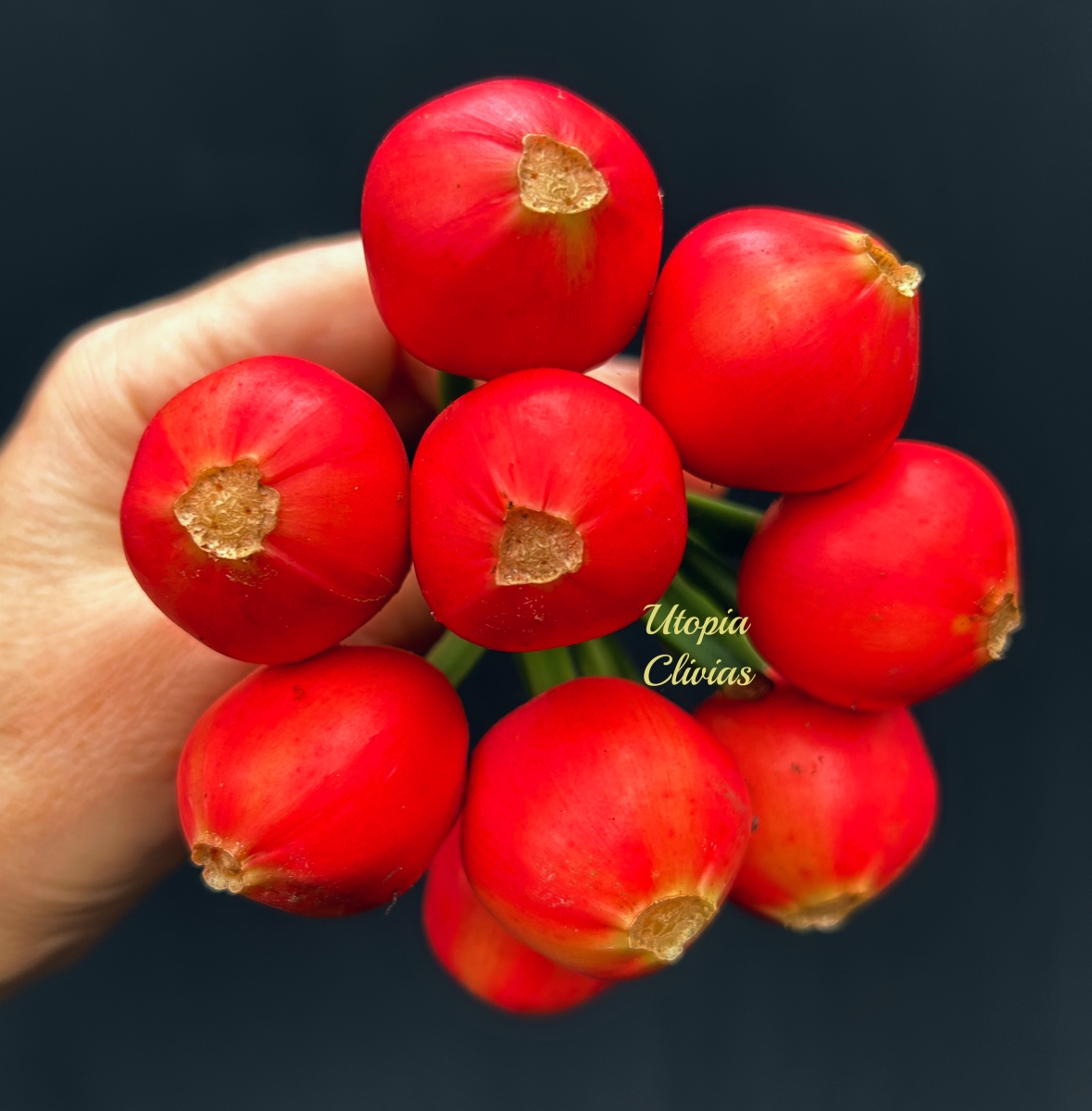
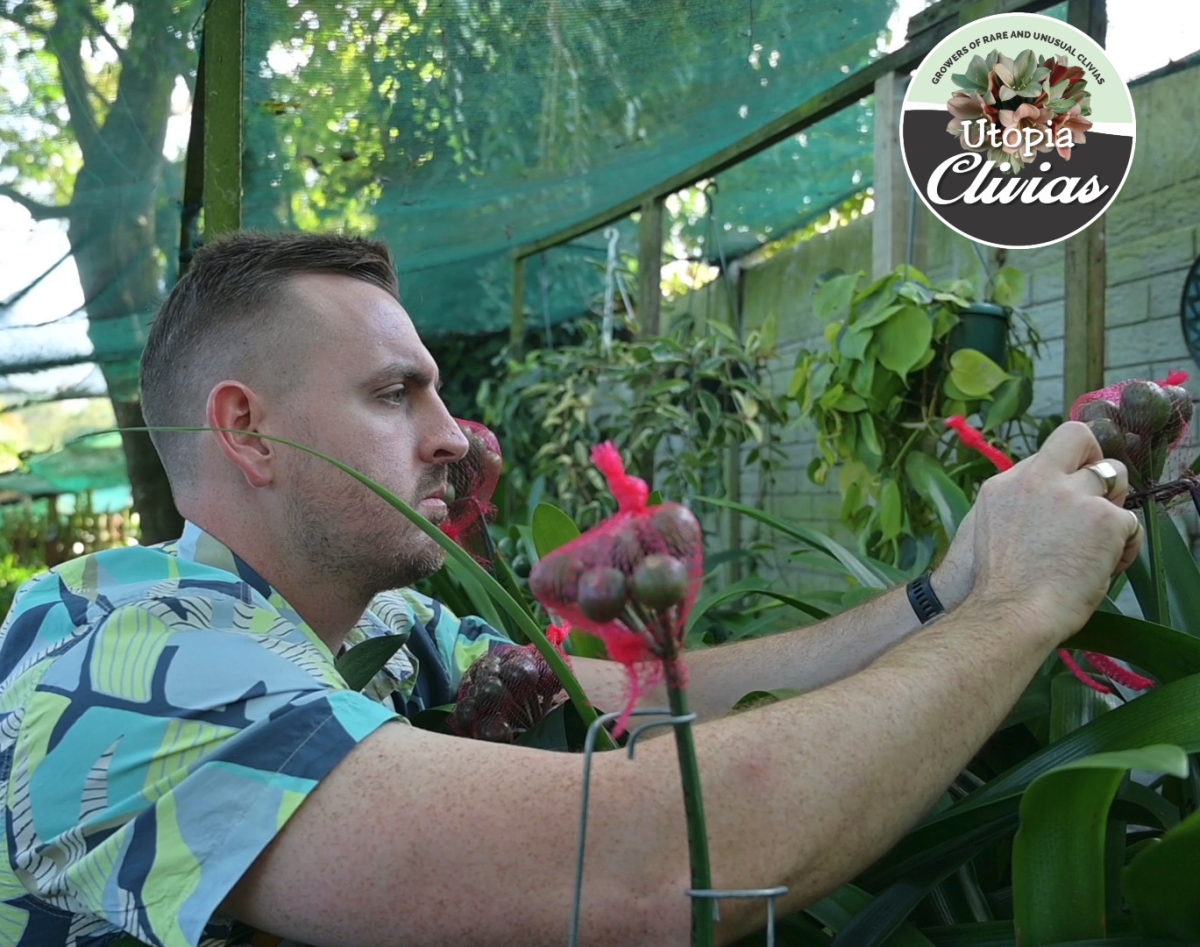
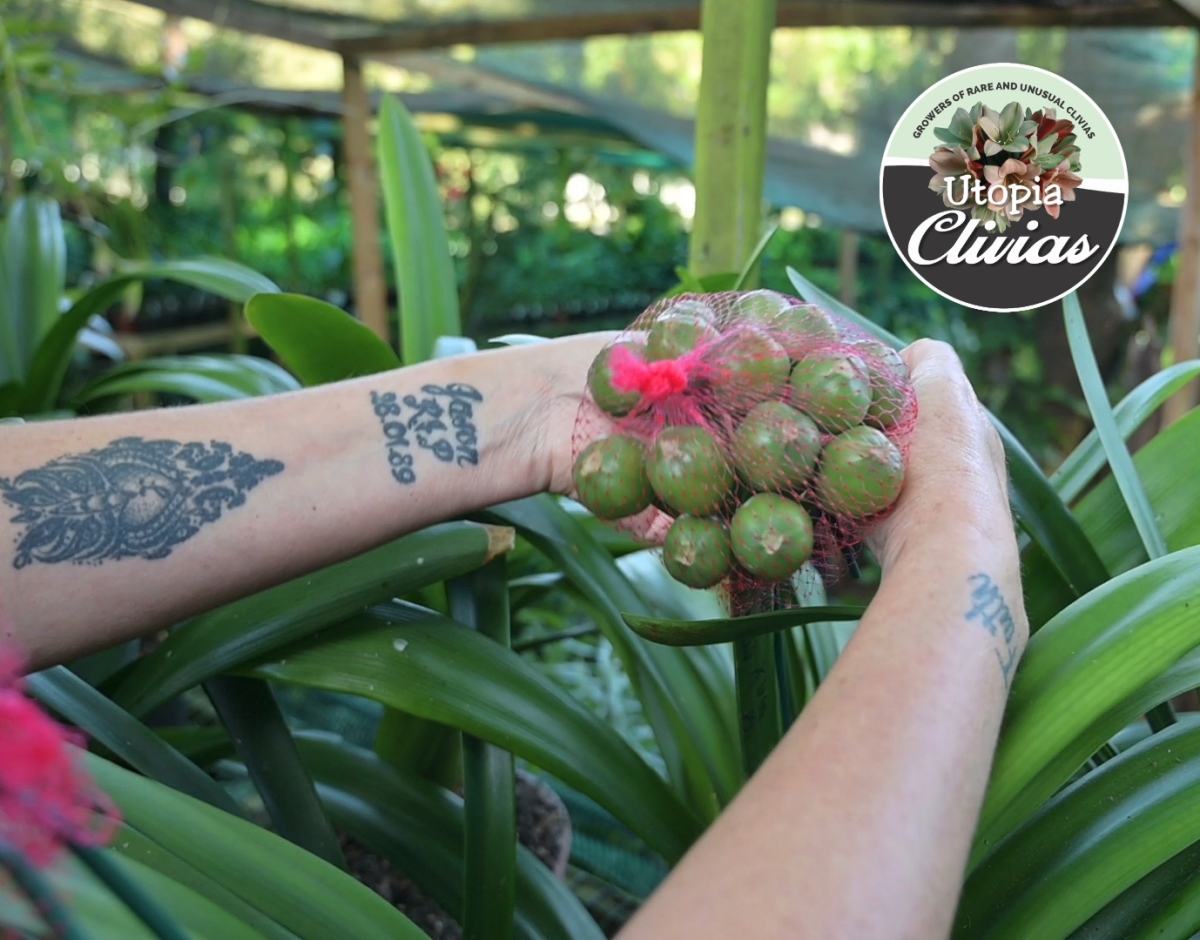
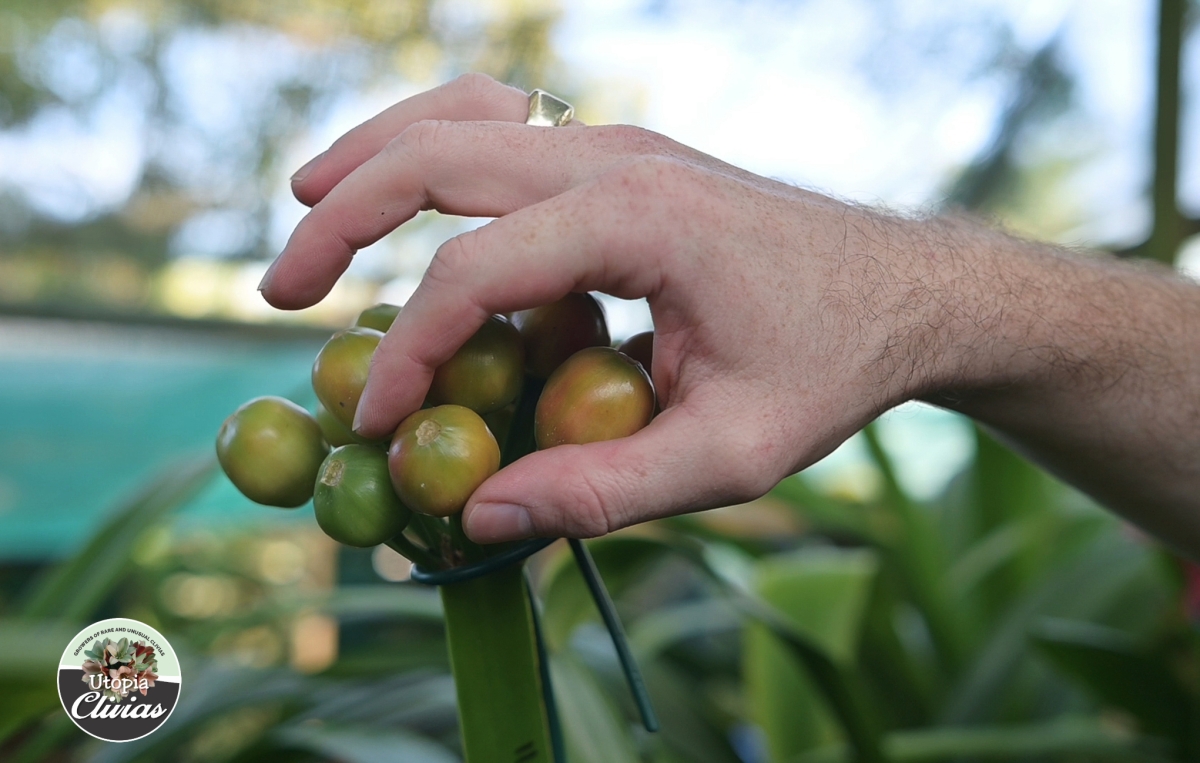
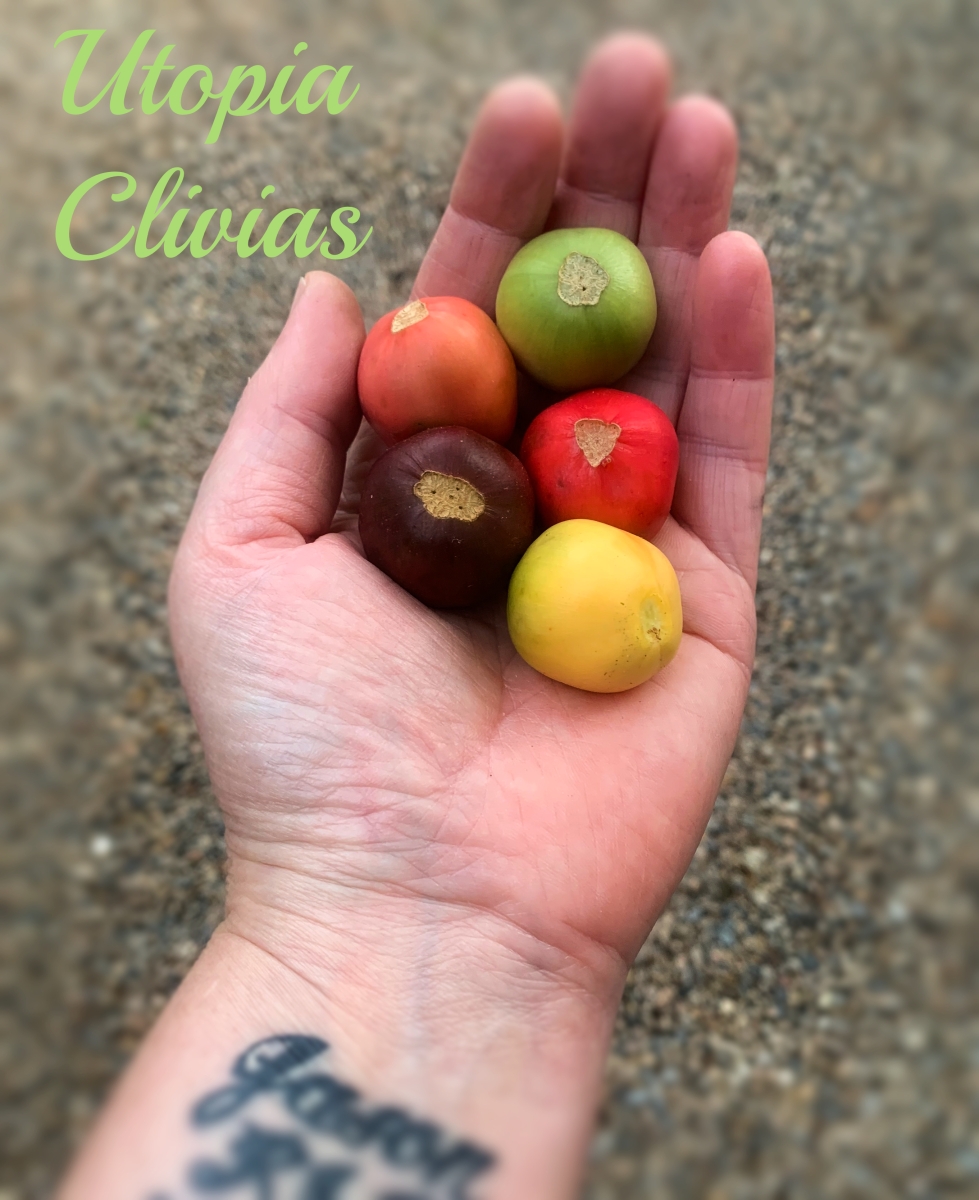
Pick the berries once they start colouring up and feel soft to the touch.
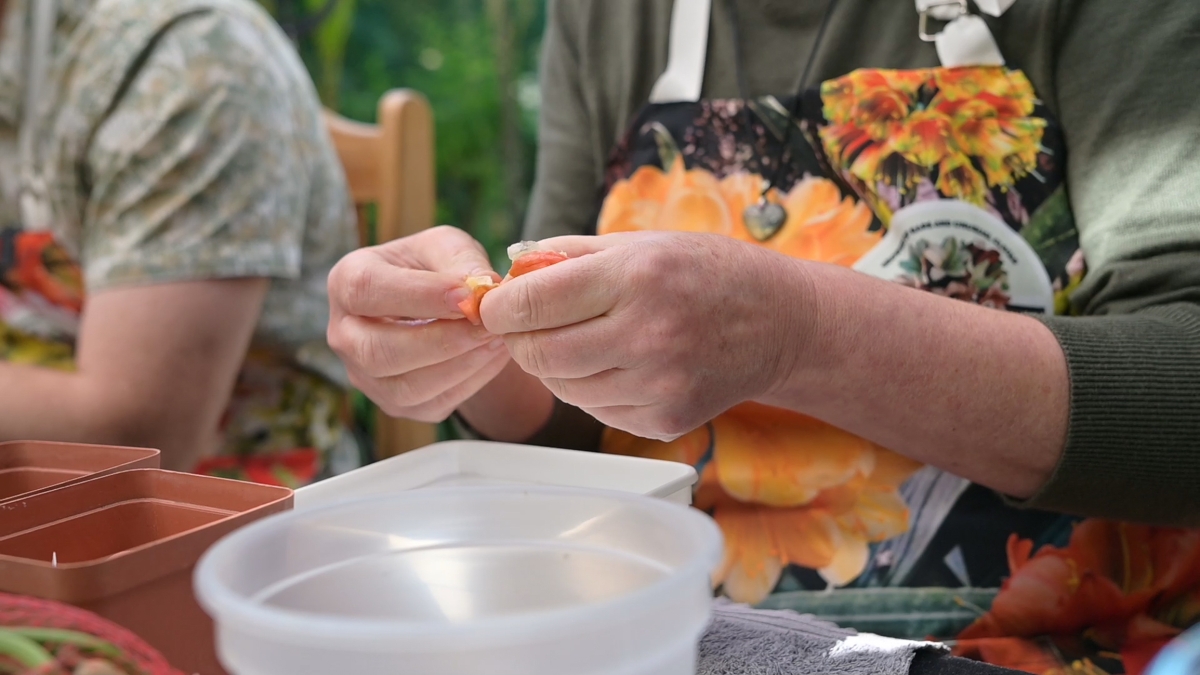
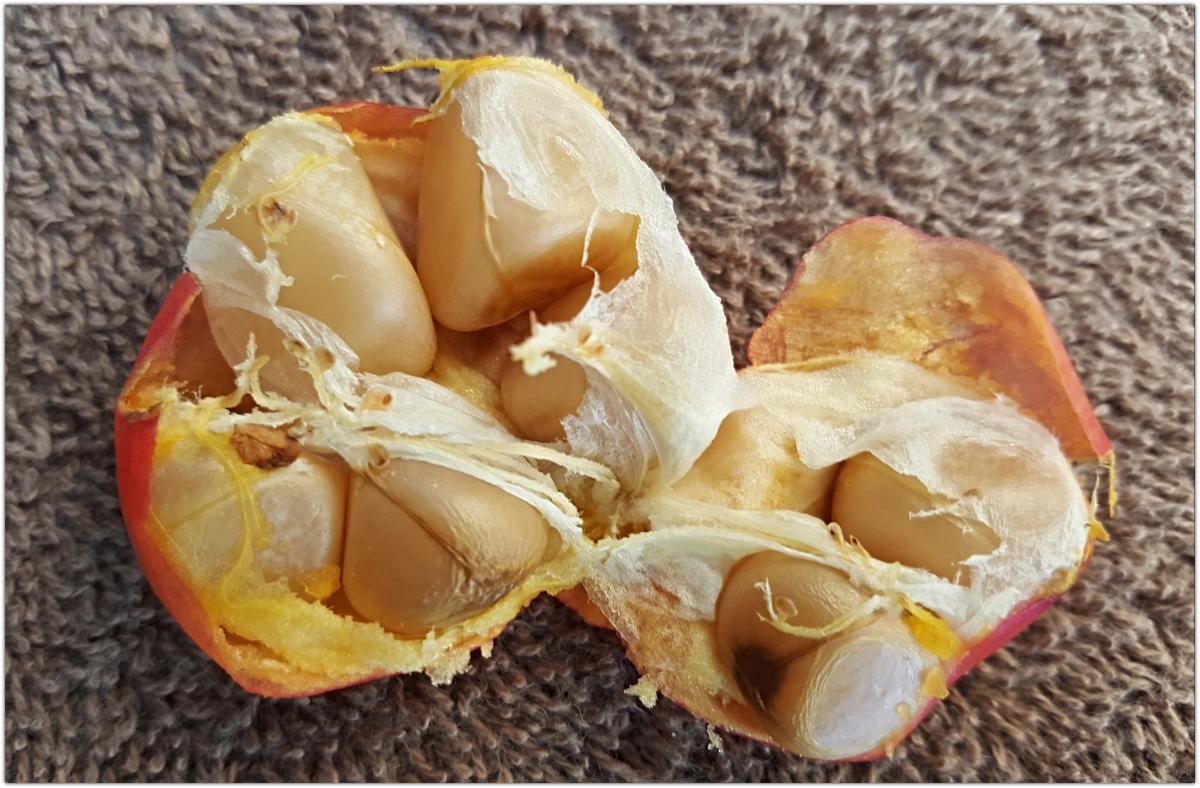
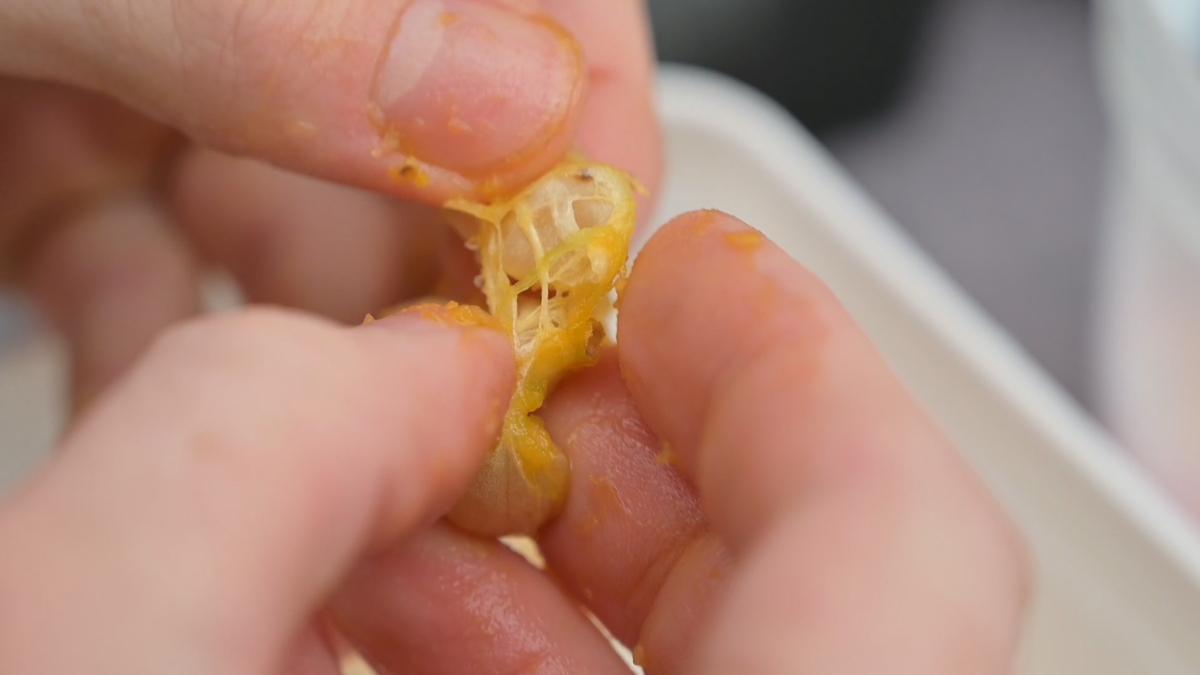
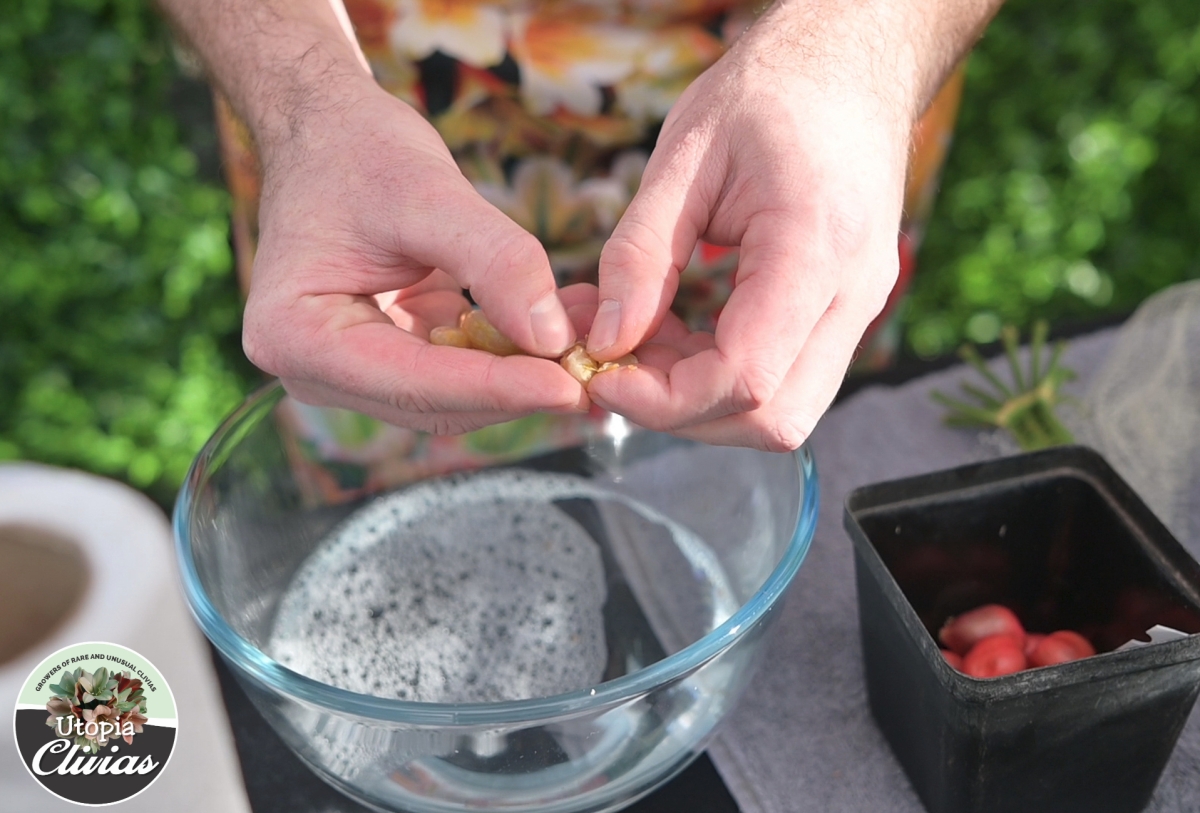
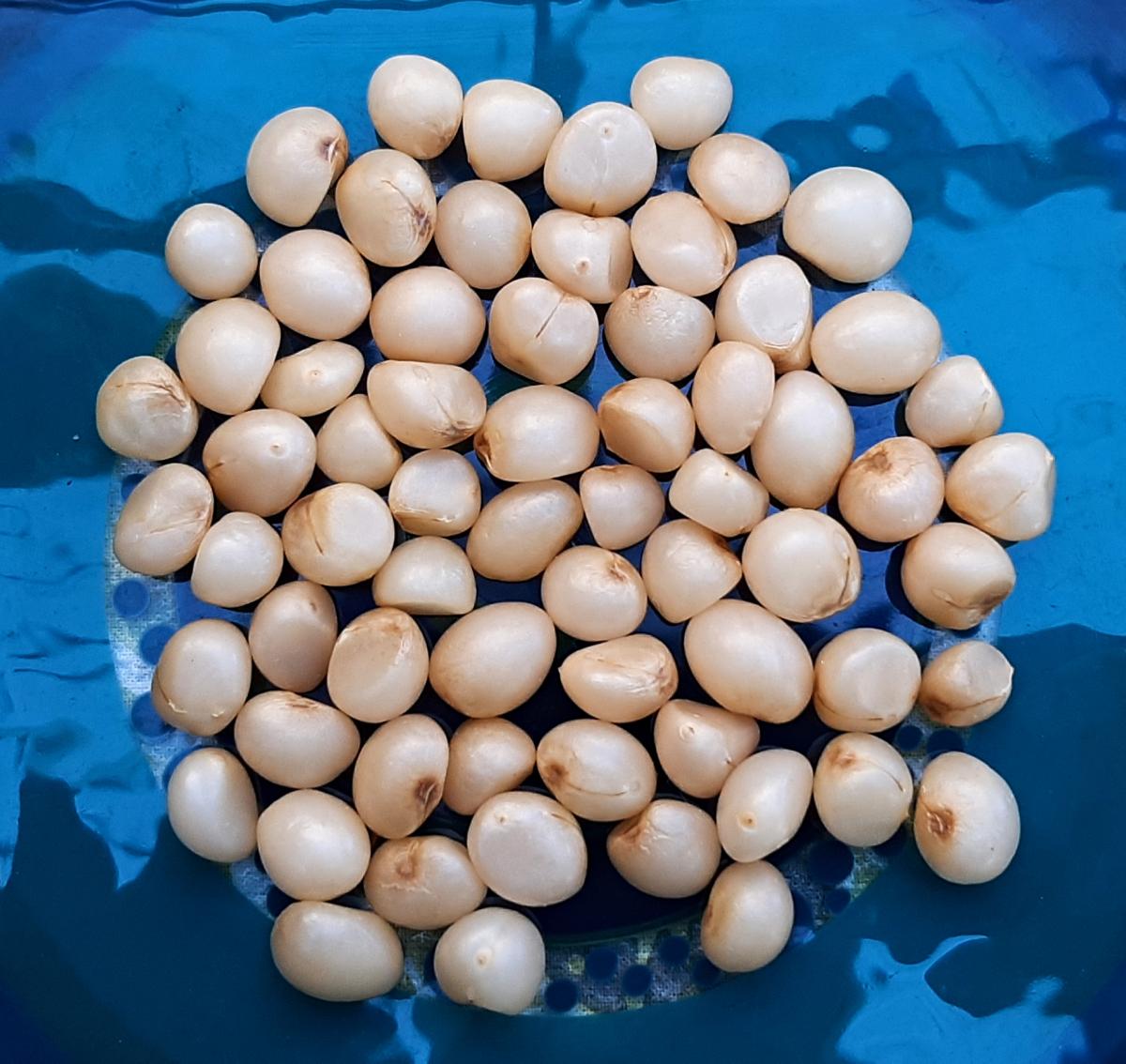
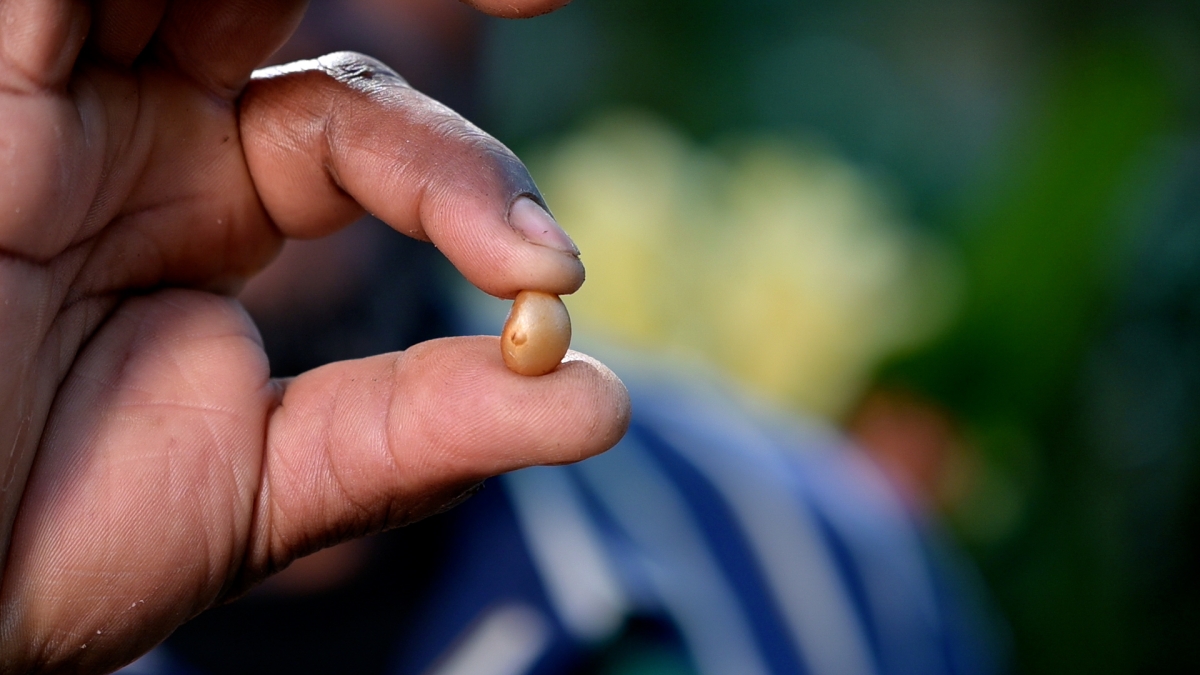
Use your thumbs to break open the berries and gently remove the pulp and membranes covering the large seeds, which should have a pearly sheen.
Be sure to thoroughly clean away all flesh, skin, and membrane from around each seed.
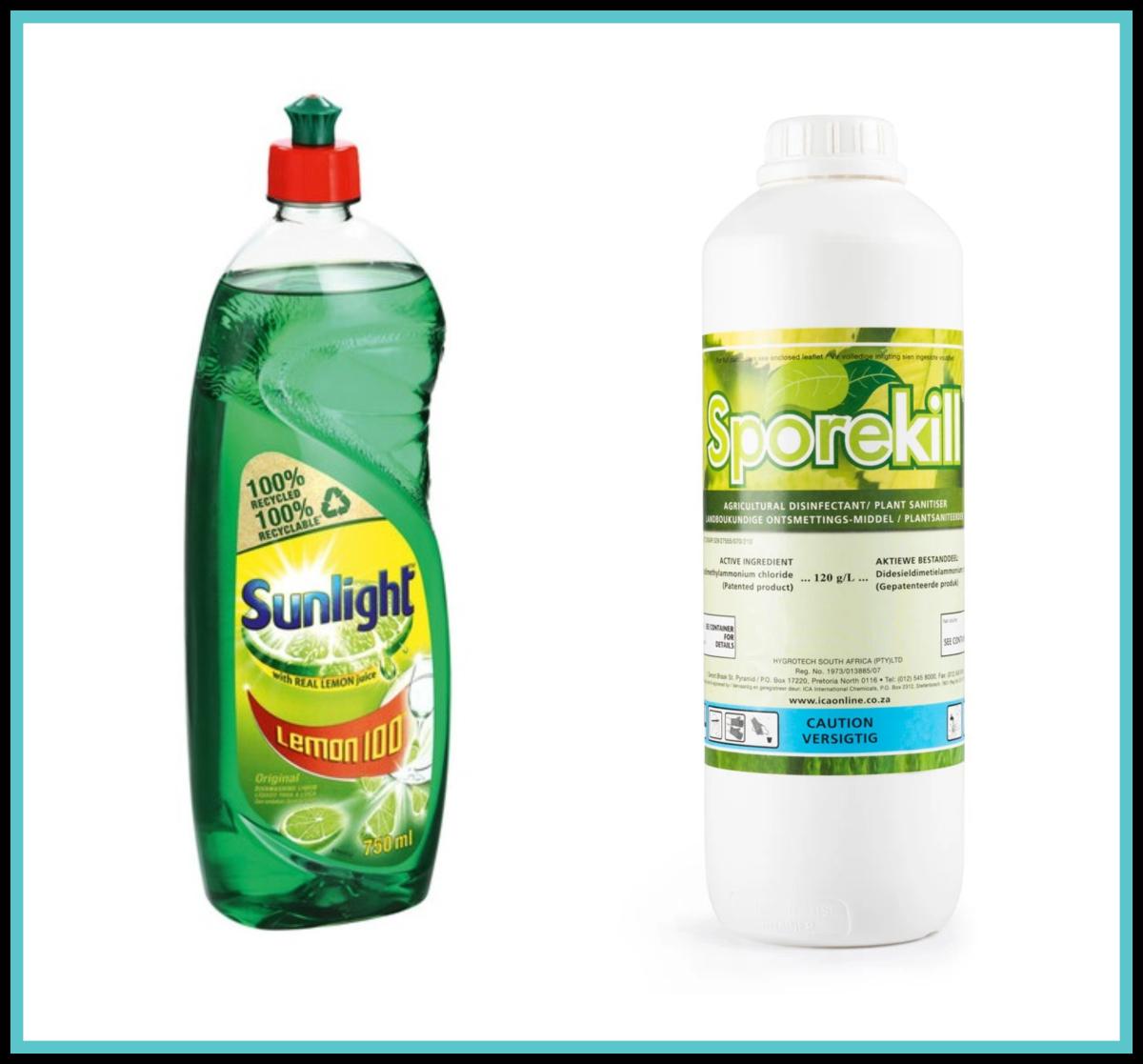
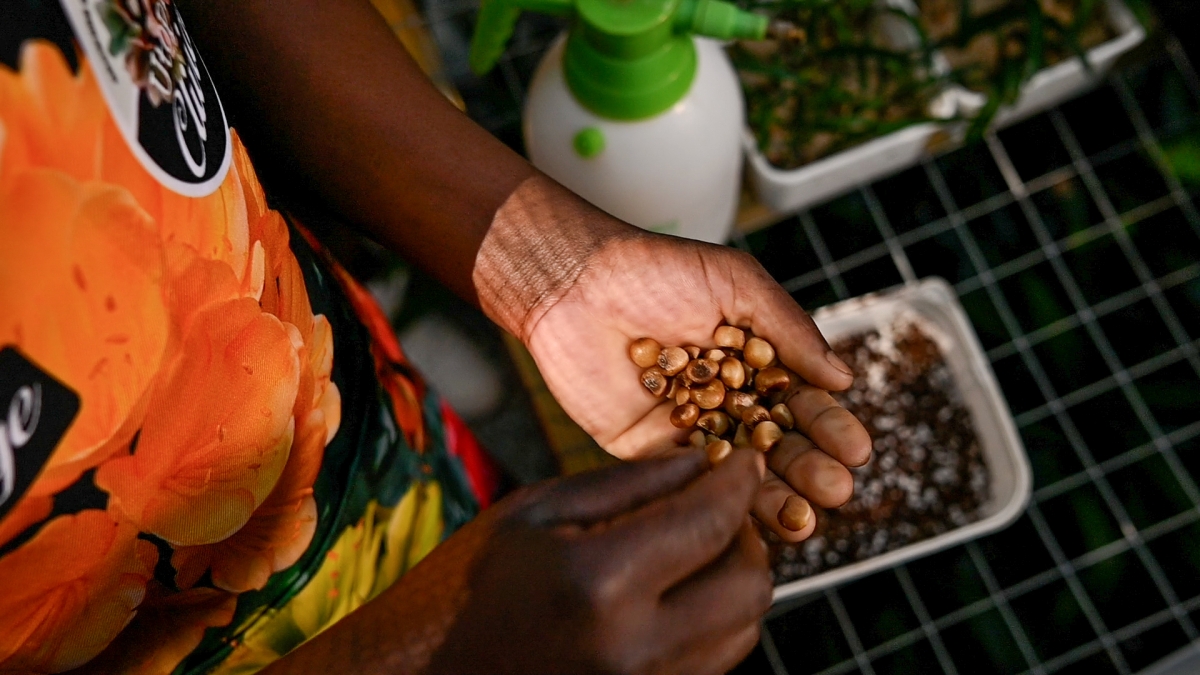
Once clean, rinse the seeds in a soluble fungicide solution or a mix of water and a small amount of dishwashing liquid. We like to add a drop of Sporekill for extra safety. Remove any remaining residue and allow the seeds to dry on a paper towel.
Preparing the Growing Mix
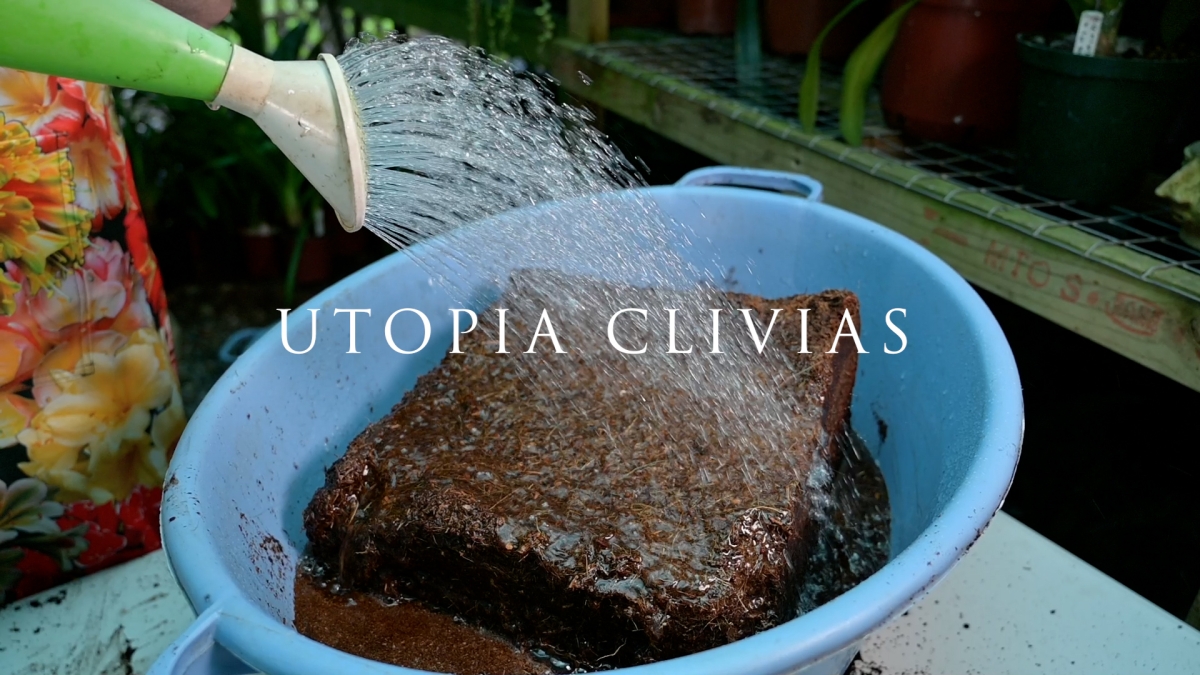
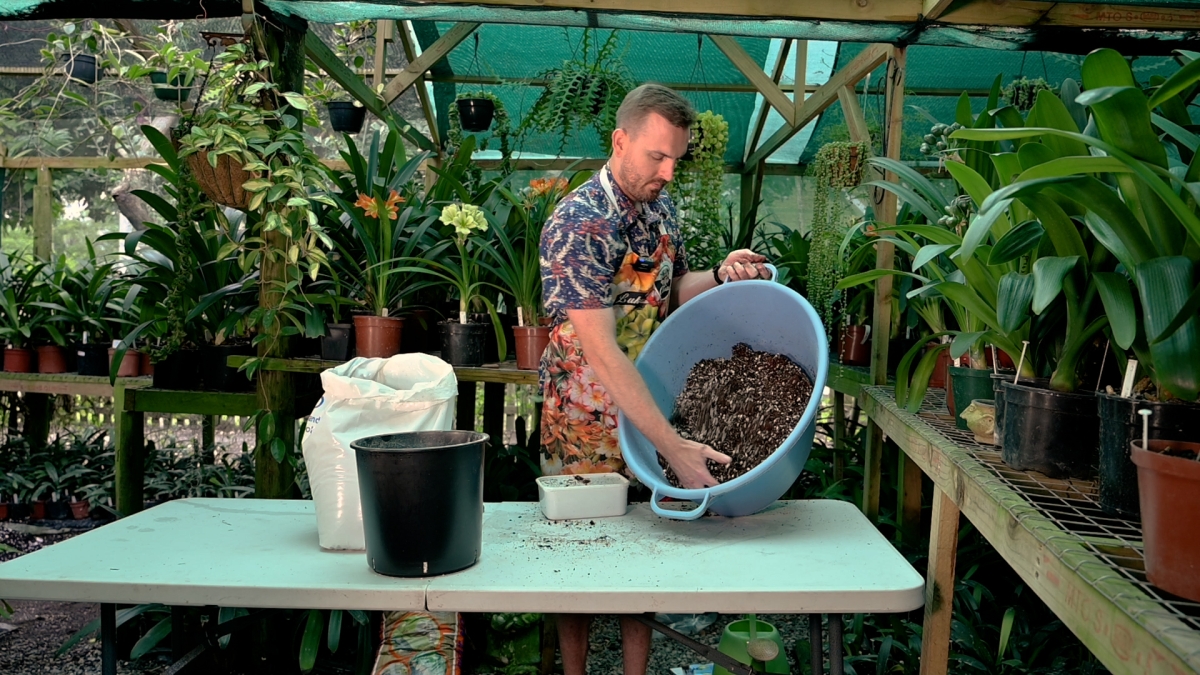
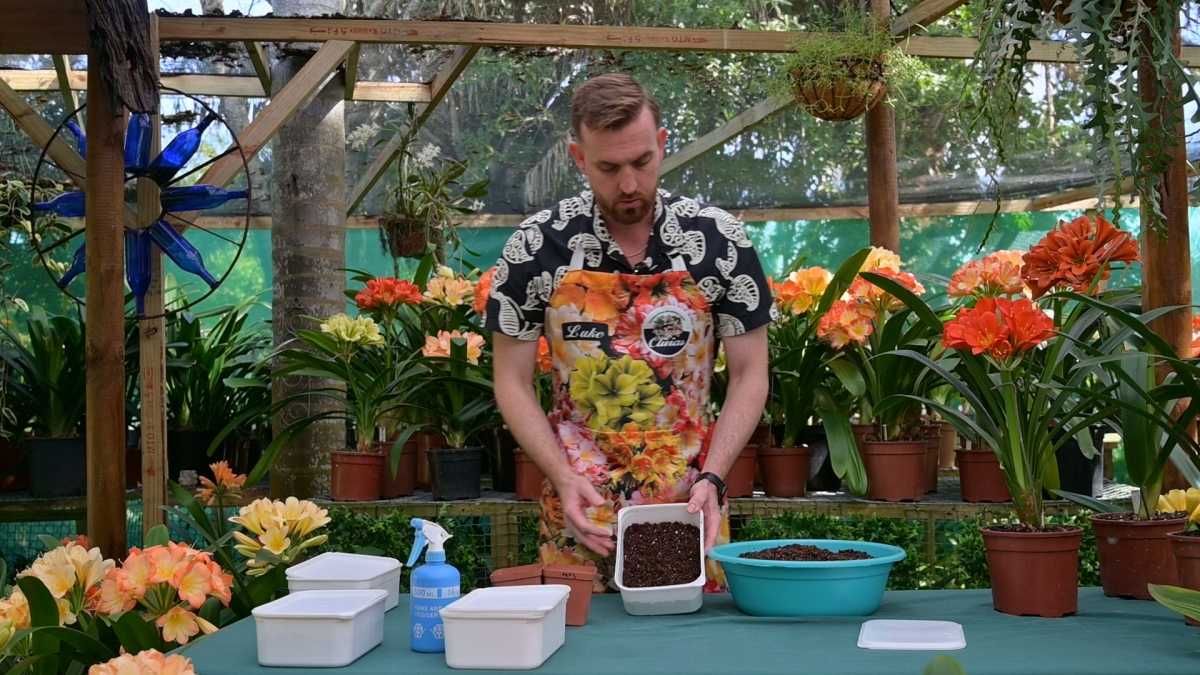
Mix equal parts palm peat or coco peat and perlite to create your seed-starting medium. Dampen the mix with water containing a weak fungicide solution.
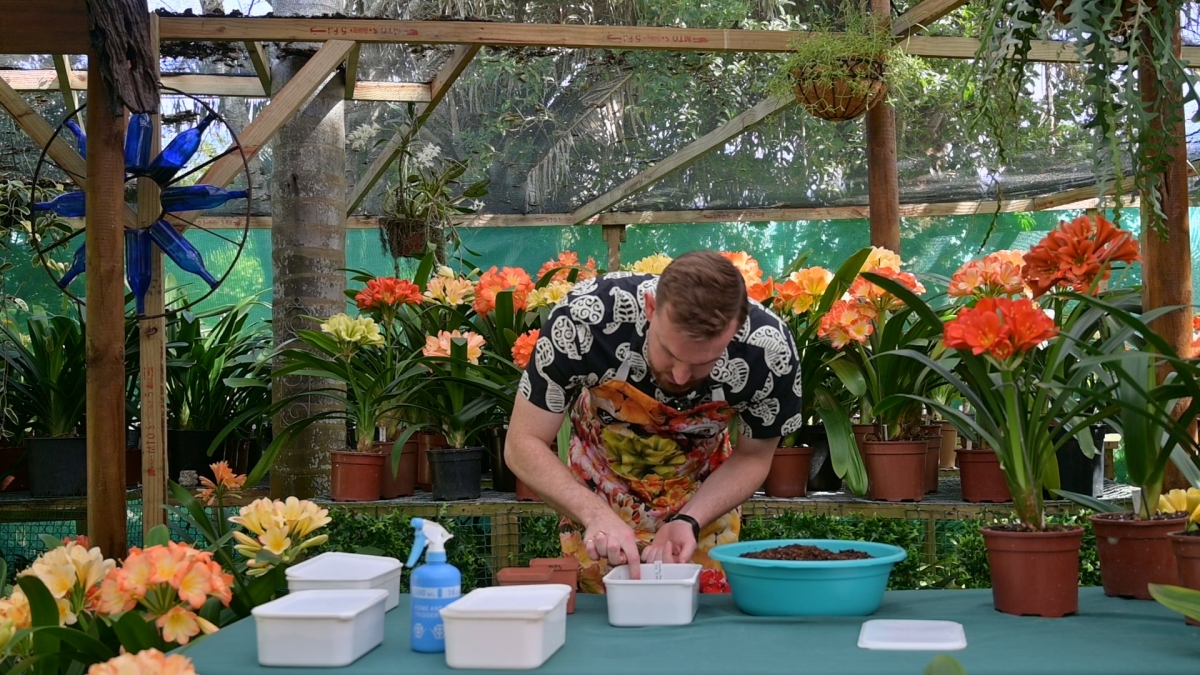
We like to use 2-litre ice cream containers because the lids fit tightly and create a moist, stable environment for germination. Fill your seedling trays or containers with the mix and gently pat the surface flat.
Sowing the Seeds
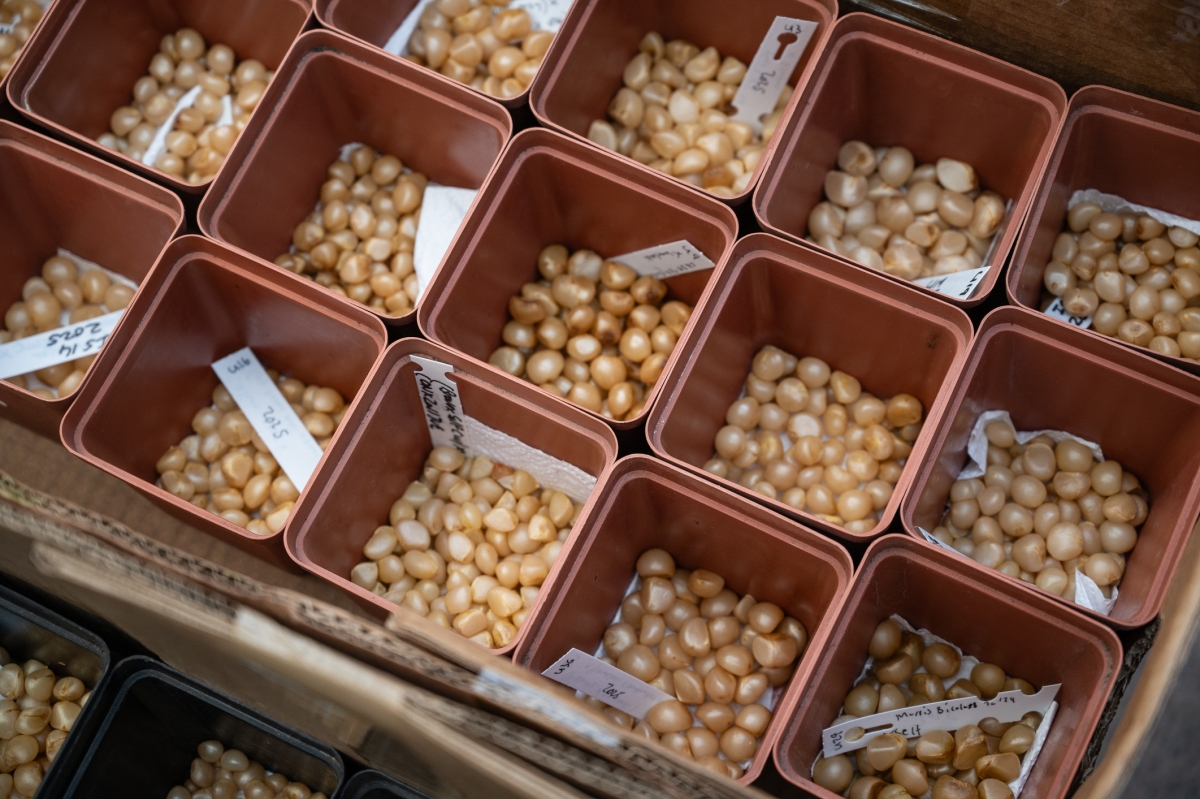
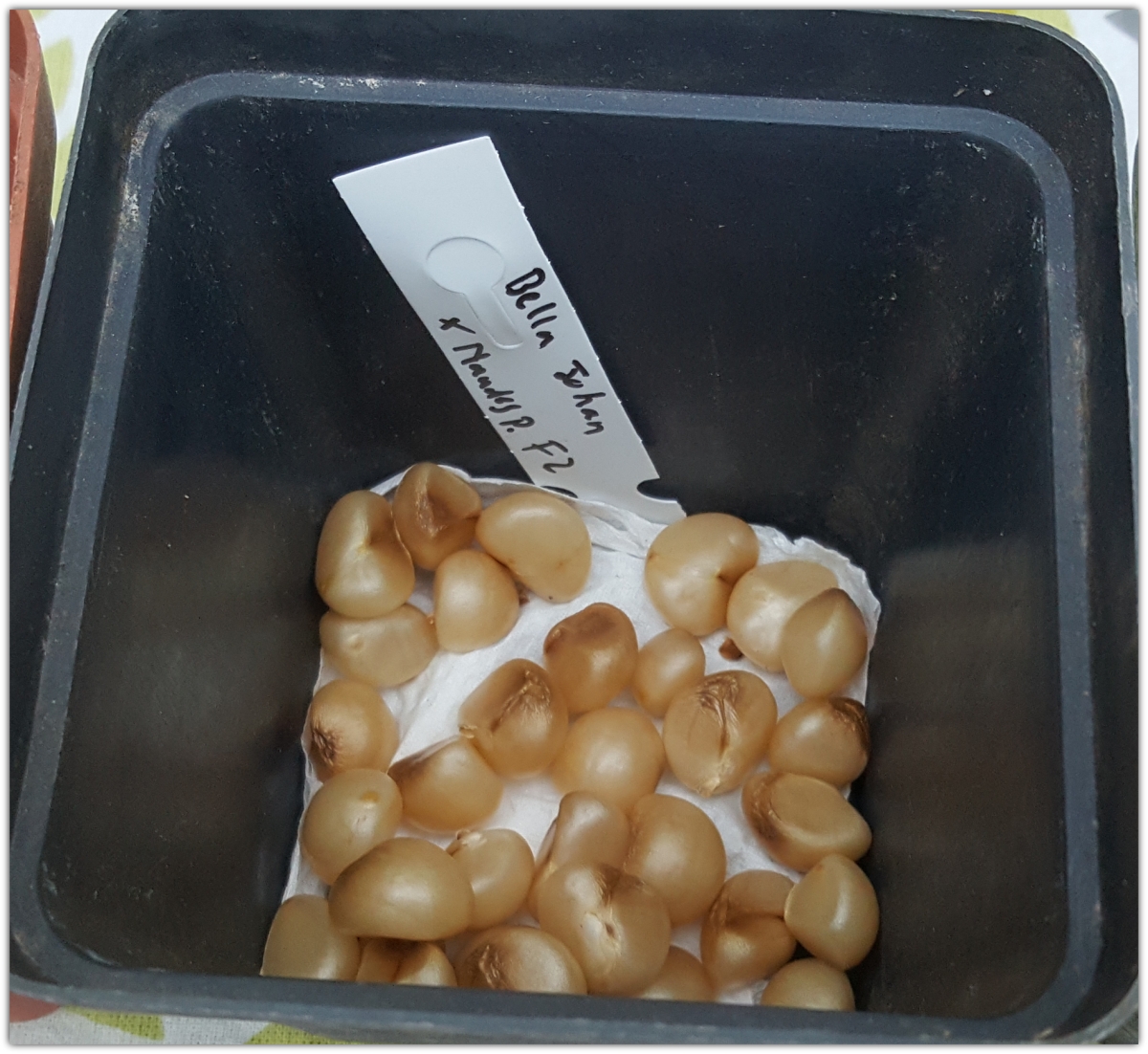
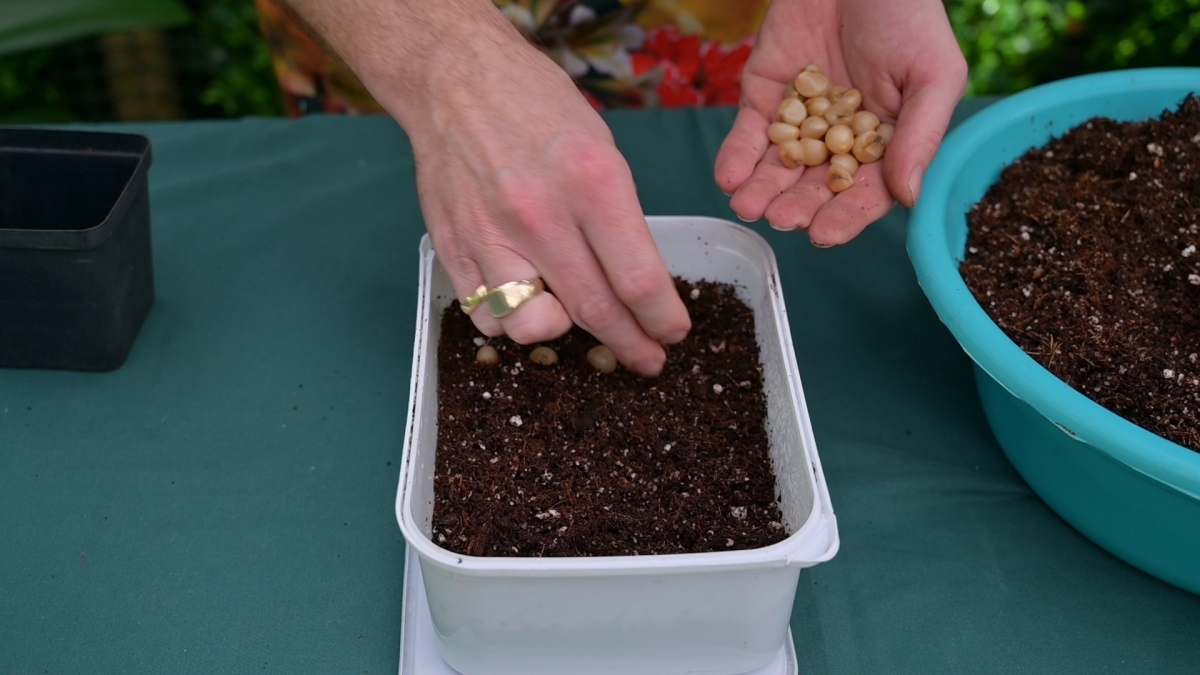
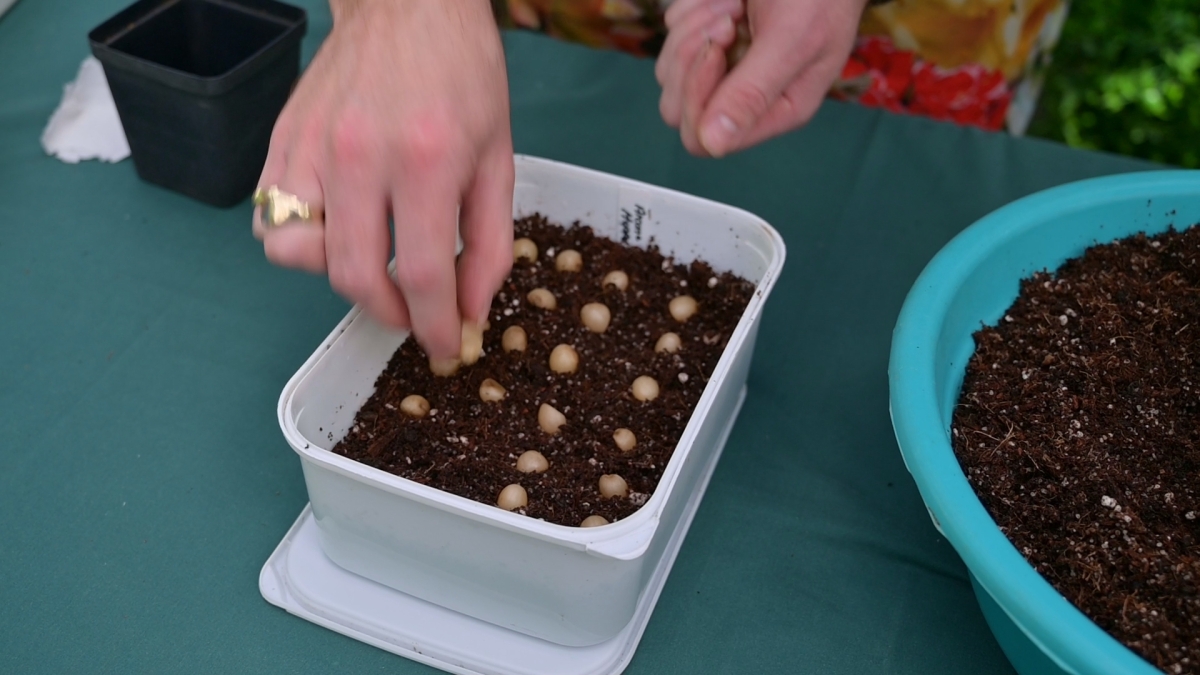
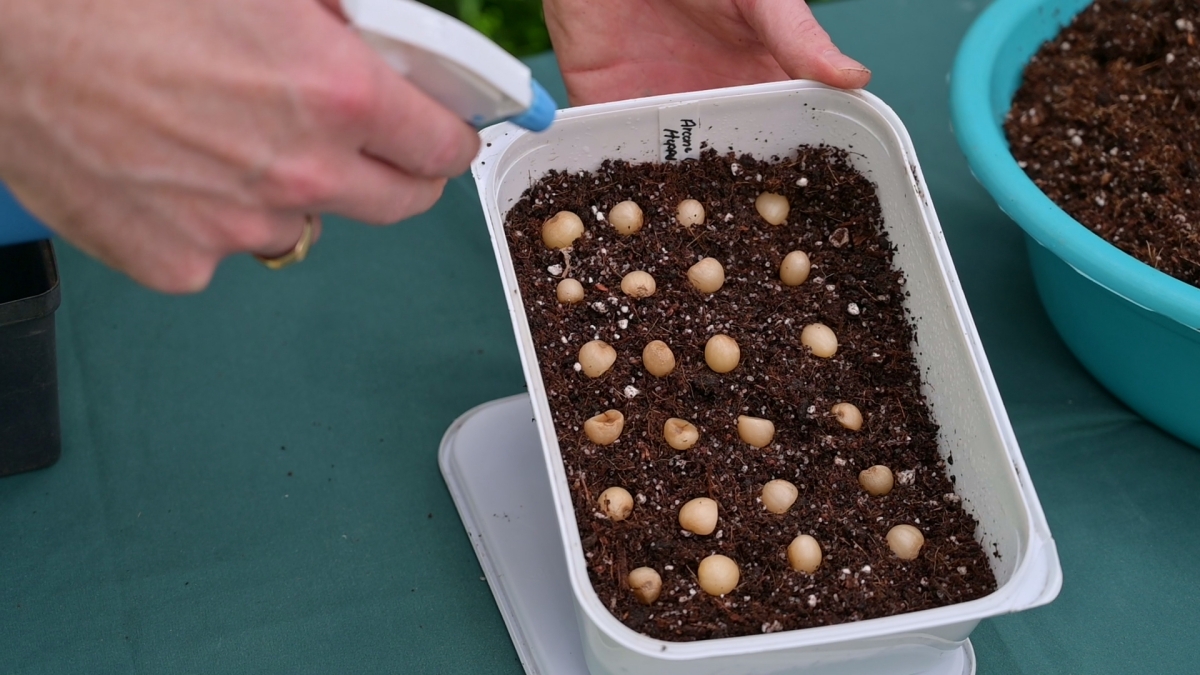
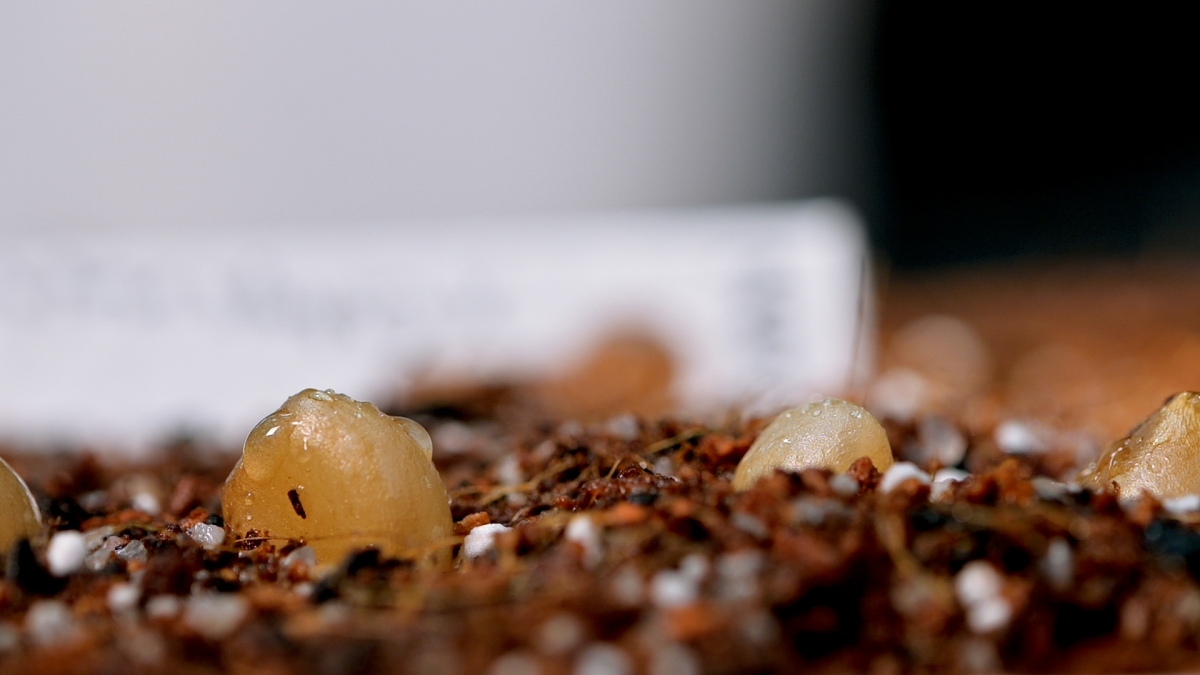
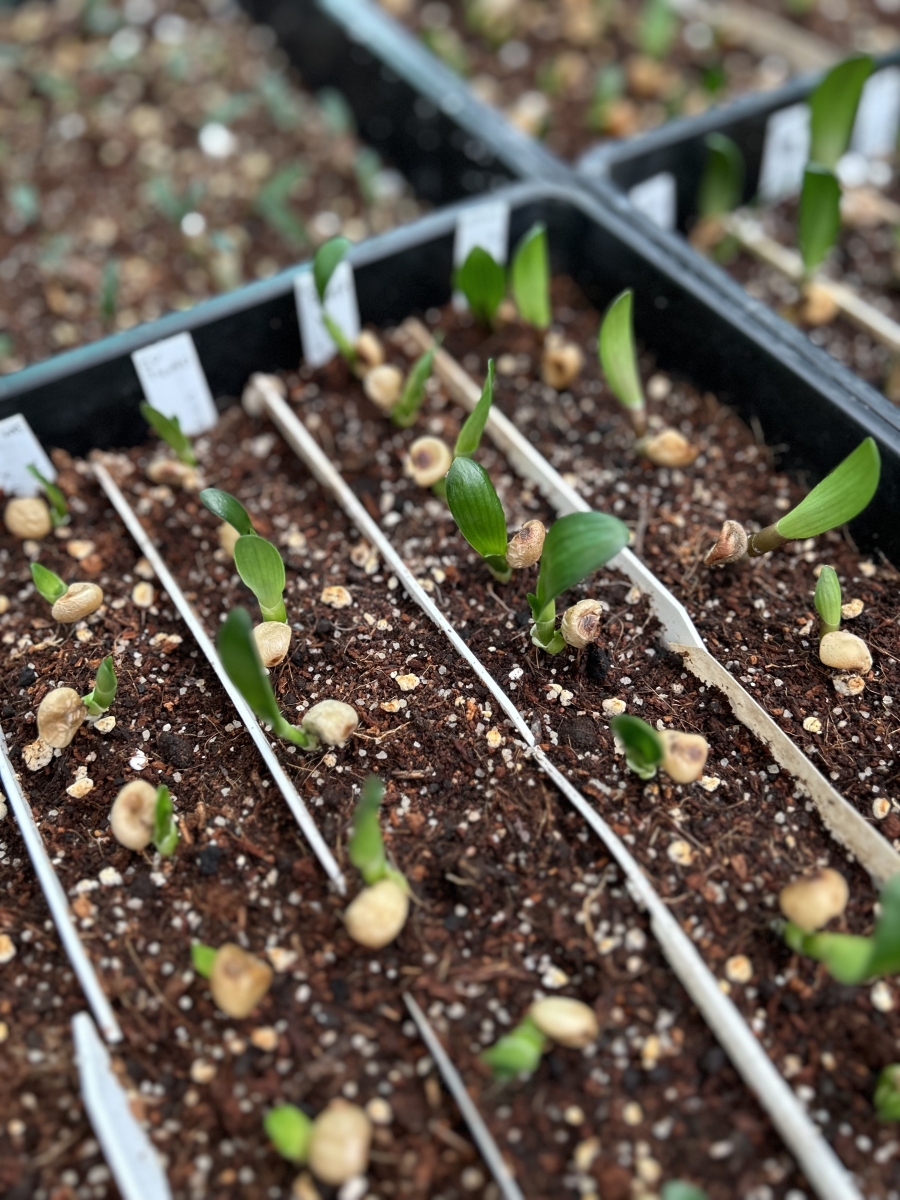
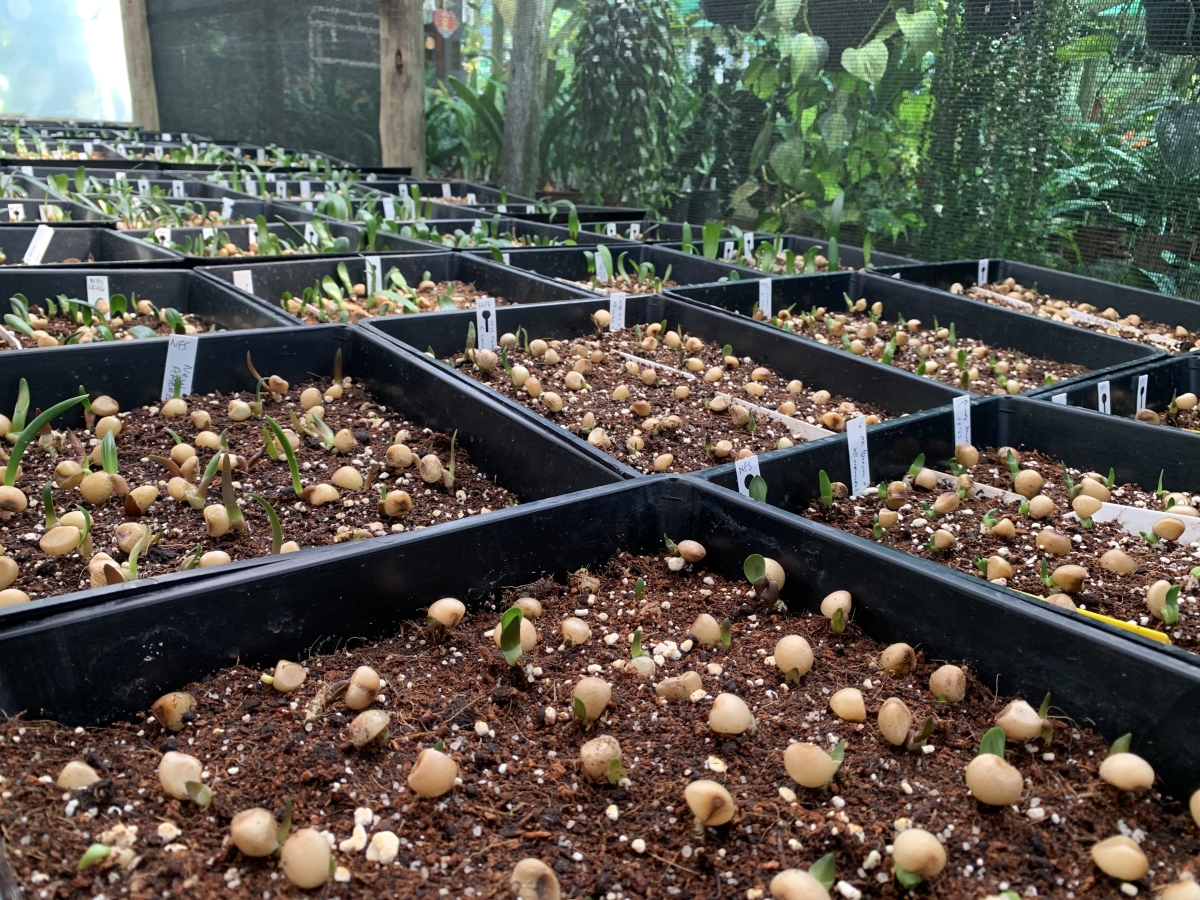
Plant the seeds eye (scar) side down, spaced about 2.5 cm apart. Don’t press them fully into the mix — the tops should still be visible above the surface.
Water them well with a weak fungicide solution to protect against rot and damping off.
Keep the soil consistently moist but not soggy.
Germination and Early Growth
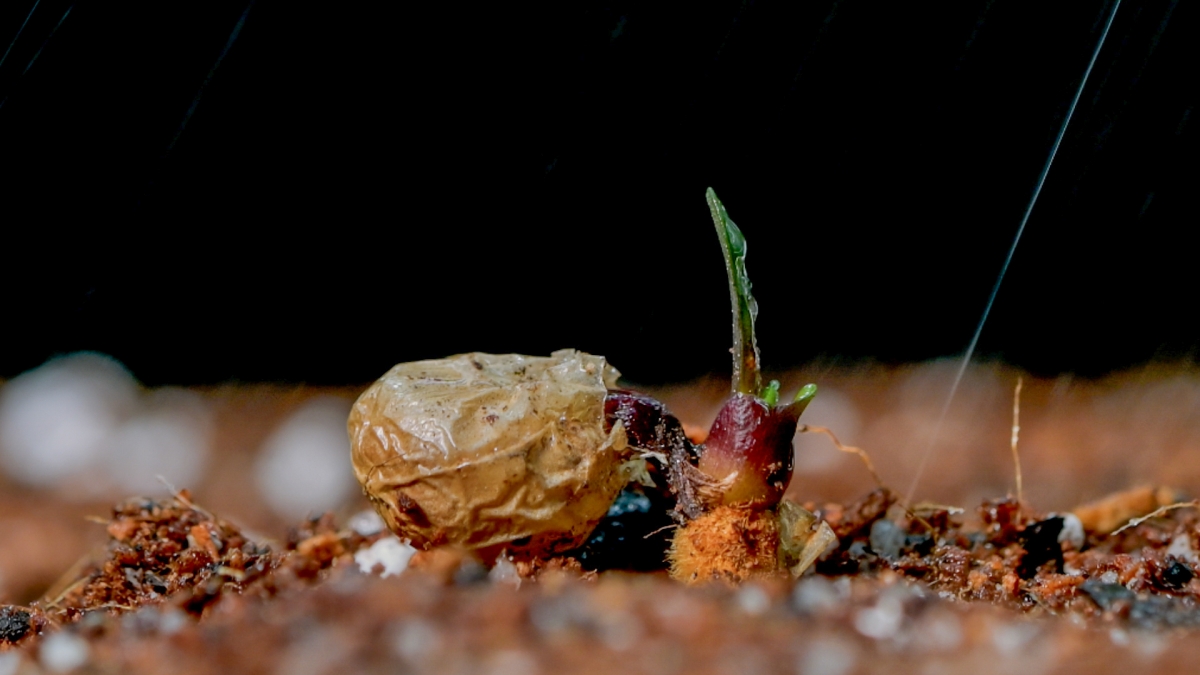
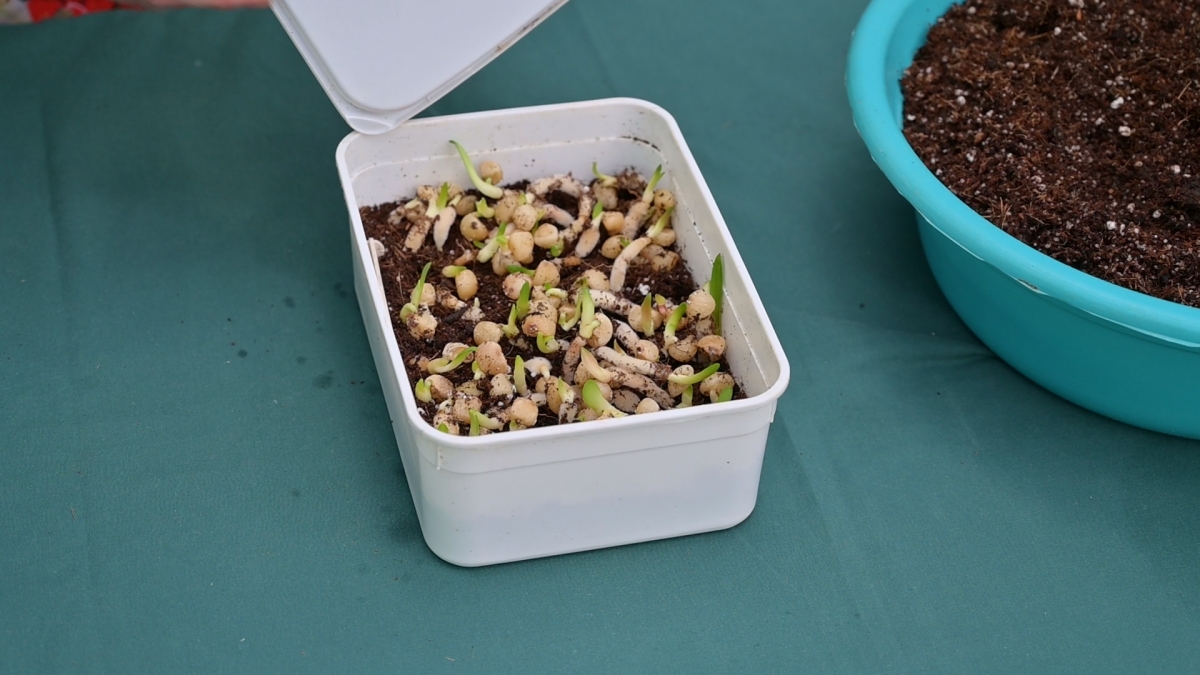
In about 4–6 weeks, you should begin to see roots emerging from the seeds.
Once they’ve sprouted, fill small pots or a deep seedling tray with commercial seedling mix or fine bark. We often mix in some of the original germination mix for consistency.
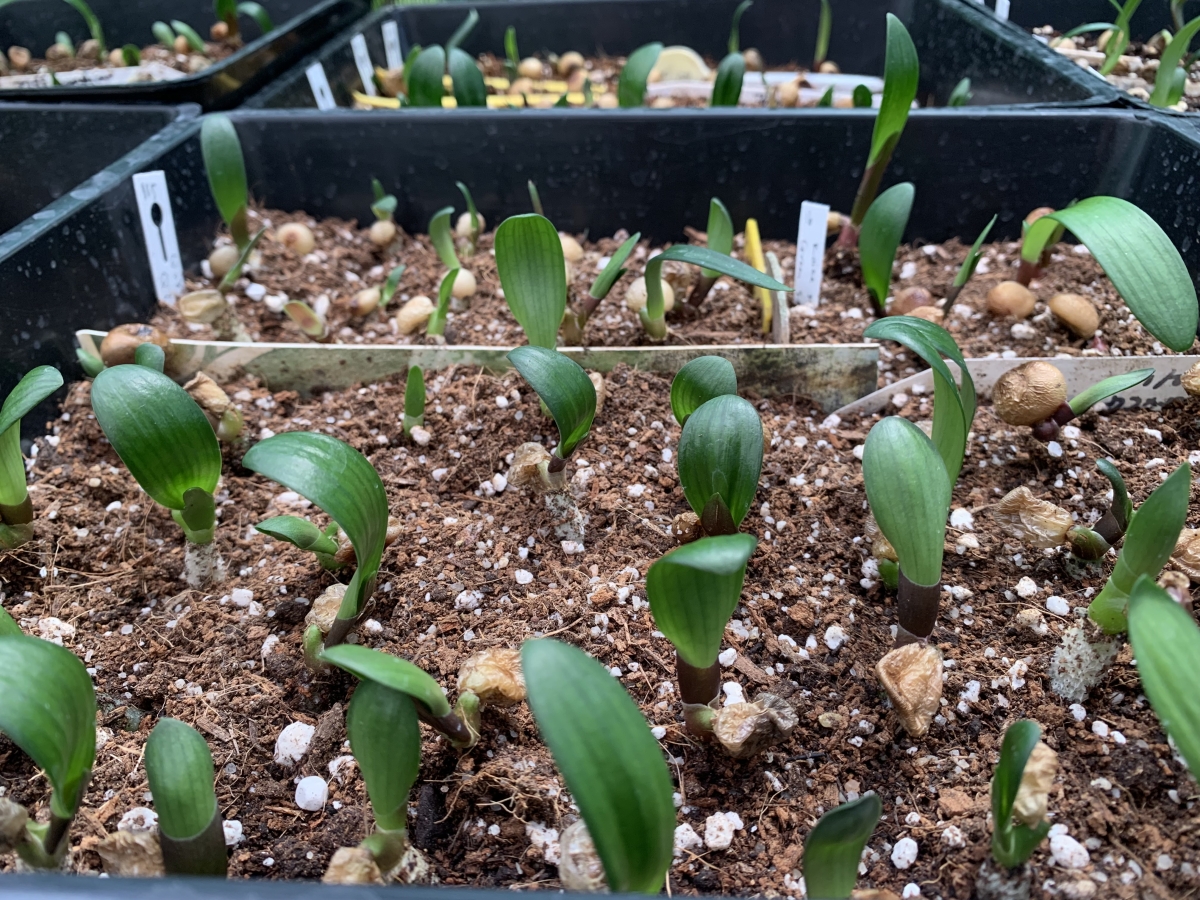
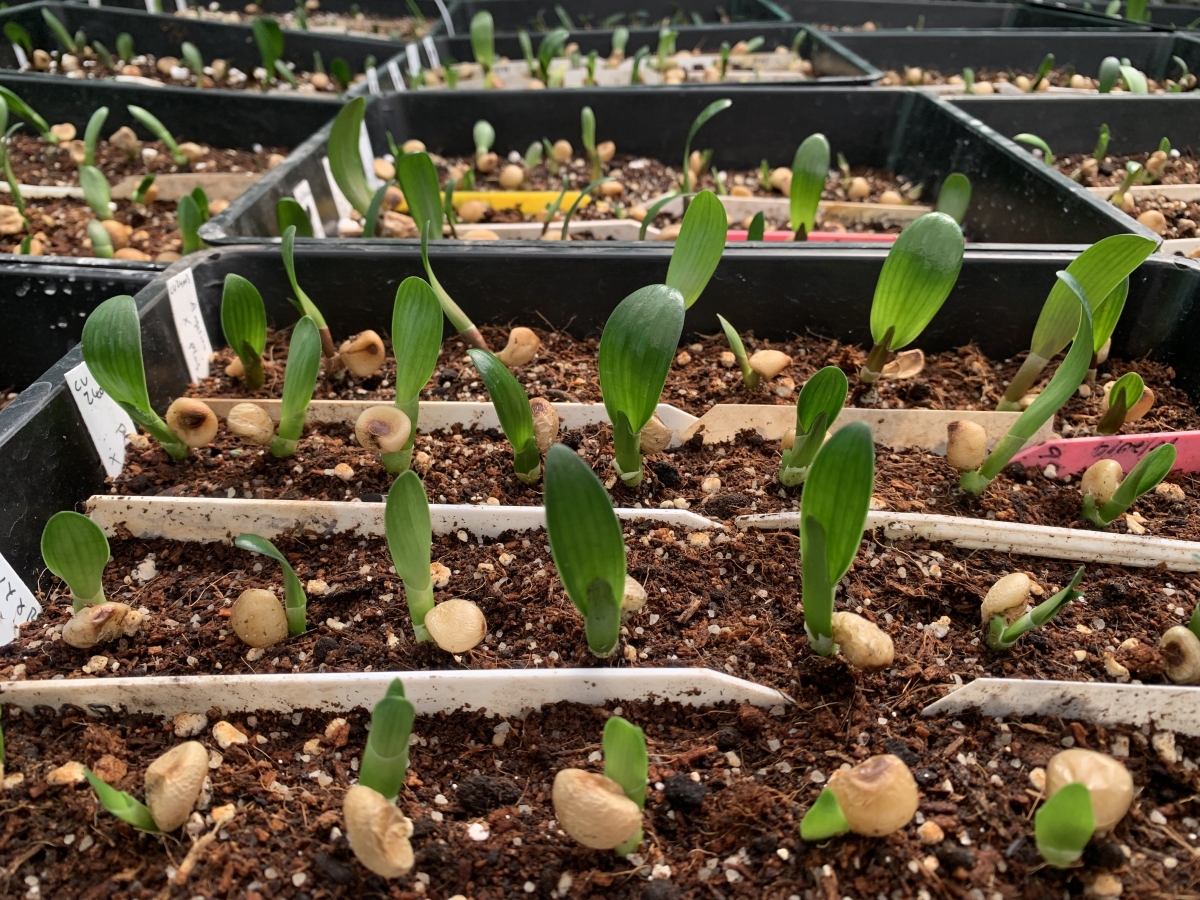
Use a dibber or stick to make holes about 2 cm deep. Plant the sprouted seeds carefully so the roots aren’t damaged. The seed should sit halfway into the soil, not buried completely.
Caring for the Seedlings
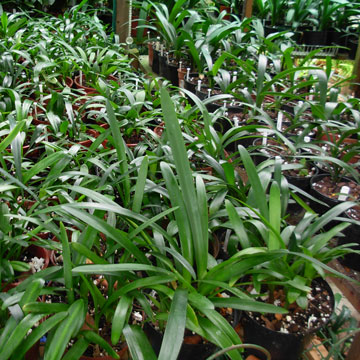
Place the seedlings in a warm, shaded spot, out of direct sun. Water twice a week with a soft spray. In hot weather, check more often — the soil must never dry out completely, but avoid overwatering.
As they grow, feed regularly with a seaweed-based growth stimulant like Kelpak. A water-soluble fungicide applied occasionally can help prevent root rot.
Seedlings grow slowly. Leave them in their small pots or trays for about two years until they are strong enough to transplant.